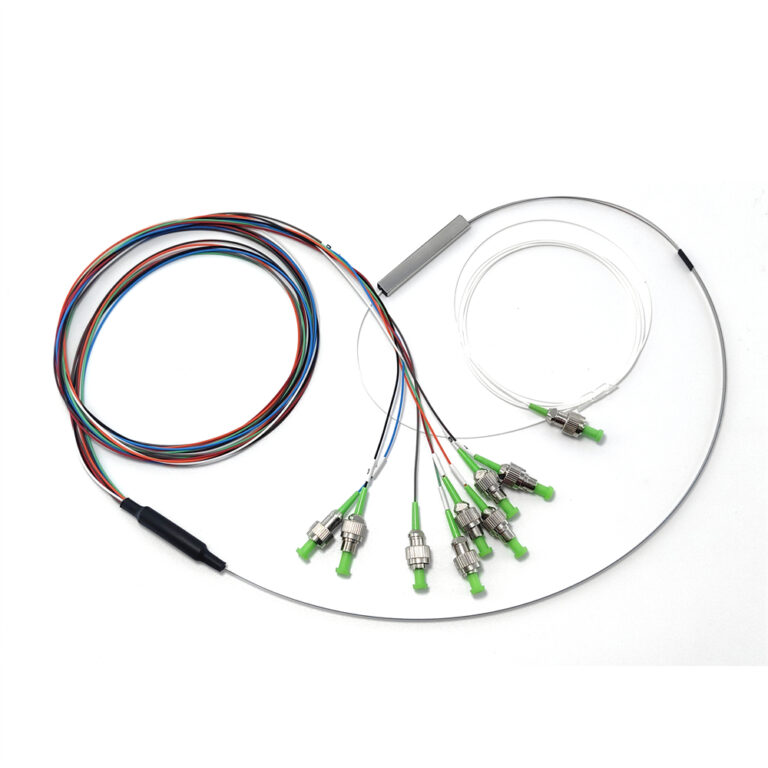
As modern data centers face unprecedented growth driven by cloud computing, artificial intelligence, big data analytics, and 5G networks, the demand for faster, higher-capacity, and more efficient interconnection solutions has become critical. To meet these challenges, optical communication technologies are evolving rapidly. Among them, multi-core fiber couplers have emerged as a key component enabling high-speed interconnections by maximizing fiber density and improving signal transmission performance.
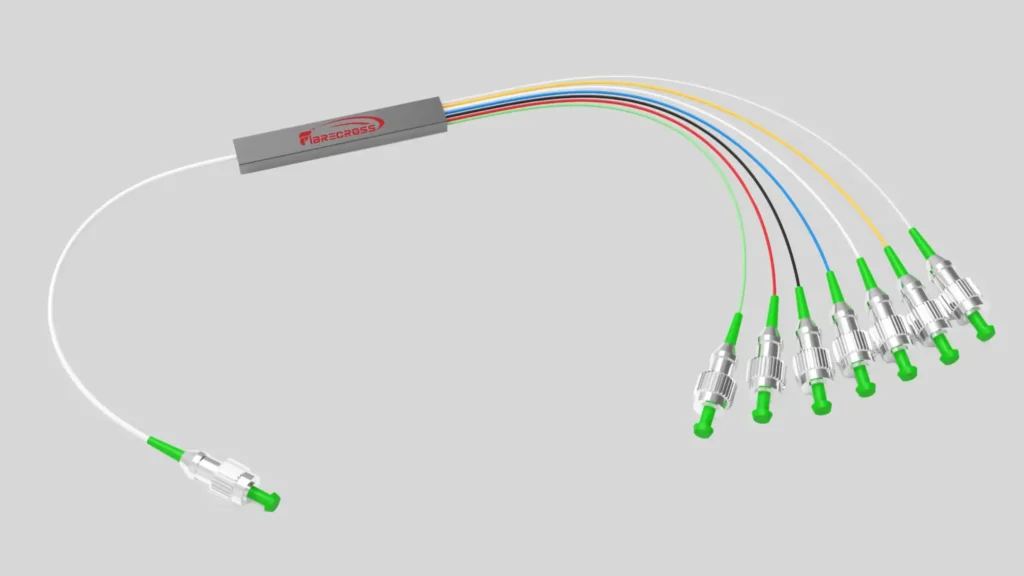
Understanding Multi-Core Fiber Couplers
A multi-core fiber coupler is an optical device designed to connect or split signals among multiple cores embedded within a single optical fiber. Unlike conventional single-core fibers, which contain only one optical path, multi-core fibers incorporate several cores—sometimes up to 7, 12, or more—inside one cladding. This innovation dramatically increases the data-carrying capacity of a single fiber cable without expanding its physical size.
The coupler’s role is to efficiently manage optical signals within these multiple cores. It allows light to be split from one core to multiple cores (fan-out), combined from multiple cores into one, or routed between cores depending on the network design requirements. This capability is fundamental in high-density optical networks, where space, weight, and performance constraints are paramount.
Importance in Data Center High-Speed Interconnection
Data centers rely heavily on fiber optic interconnections to link servers, switches, storage units, and other networking equipment. The speed and reliability of these interconnections directly impact data center performance and overall user experience.
Enhancing Fiber Density and Space Utilization
Traditional single-core fiber cabling systems require large bundles of individual fibers to scale network capacity, often resulting in complex cable management and crowded infrastructure. Multi-core fiber couplers enable multiple data channels to coexist within a single fiber strand, significantly reducing cable volume and easing congestion in cable trays and racks. This streamlined cabling architecture simplifies installation and maintenance while optimizing space.
Boosting Network Scalability
As data traffic surges, data centers must rapidly scale their capacity. Multi-core fiber couplers provide a flexible solution by allowing incremental upgrades without massive physical infrastructure changes. This scalability ensures data centers can expand bandwidth and add new services without costly rewiring or space expansion.
Maintaining Signal Integrity for High-Speed Transmission
High-speed signals are sensitive to loss and interference. Multi-core fiber couplers are engineered to minimize insertion loss and back reflection, which are crucial parameters for preserving signal quality over long distances. Low-loss couplers ensure that data is transmitted with high fidelity, supporting multi-gigabit and even terabit-level speeds demanded by contemporary data centers.
Enabling Advanced Multiplexing Technologies
Multi-core fibers and couplers are integral to space division multiplexing (SDM), an advanced technology that spatially separates data channels in different cores to multiply total throughput per fiber. SDM, combined with wavelength division multiplexing (WDM), dramatically increases fiber capacity, positioning multi-core fiber couplers as future-proof solutions for evolving network architectures.

Comparison With Traditional Single-Core Fiber Solutions
While single-core fiber solutions remain dominant, multi-core fiber couplers offer clear advantages in certain scenarios:
Higher Bandwidth Density: Multiple cores carry multiple channels simultaneously, multiplying capacity without proportional infrastructure expansion.
Reduced Physical Footprint: Multi-core fibers consolidate many fibers into one, reducing cable diameter and weight, which is essential in dense, space-limited data centers.
Lower Operational Complexity: Simplified cabling decreases installation time, potential errors, and ongoing maintenance workload.
Cost Efficiency Over Time: Though multi-core fiber components can have higher upfront costs, the overall savings in space, management, and scalability provide long-term benefits.
Practical Deployment Considerations
Implementing multi-core fiber couplers in a data center environment requires careful planning:
Compatibility: Multi-core couplers must align with existing connector standards and network equipment interfaces to ensure seamless integration.
Testing: Rigorous performance testing—including insertion loss, return loss, and crosstalk—is essential to guarantee reliability under demanding conditions.
Environmental Factors: Consideration of temperature, vibration, and mechanical stresses ensures long-term stability and durability of multi-core couplers.
Supplier Reliability: Partnering with experienced manufacturers like Fibrecross ensures access to high-quality, customized multi-core fiber couplers with reliable performance and technical support.
Future Trends and Opportunities
The future of data center networking points toward even higher speeds and greater complexity. Multi-core fiber couplers will continue to evolve alongside technologies such as silicon photonics, AI-optimized network management, and quantum communications. Their role in supporting emerging architectures like disaggregated data centers and edge computing will only grow in significance.
Conclusion
Multi-core fiber couplers represent a transformative technology in data center optical interconnections. By enabling higher fiber density, scalable network expansion, and preserving signal integrity for high-speed transmissions, they address key challenges faced by today’s data centers. As the demand for bandwidth and efficiency escalates, integrating multi-core fiber couplers is a strategic step toward building future-ready, high-performance data center networks.